


25 Years Of Wool Insulation – Looking to the future
25 Years of Wool Insulation: Why Are We Still Researching Its Potential?
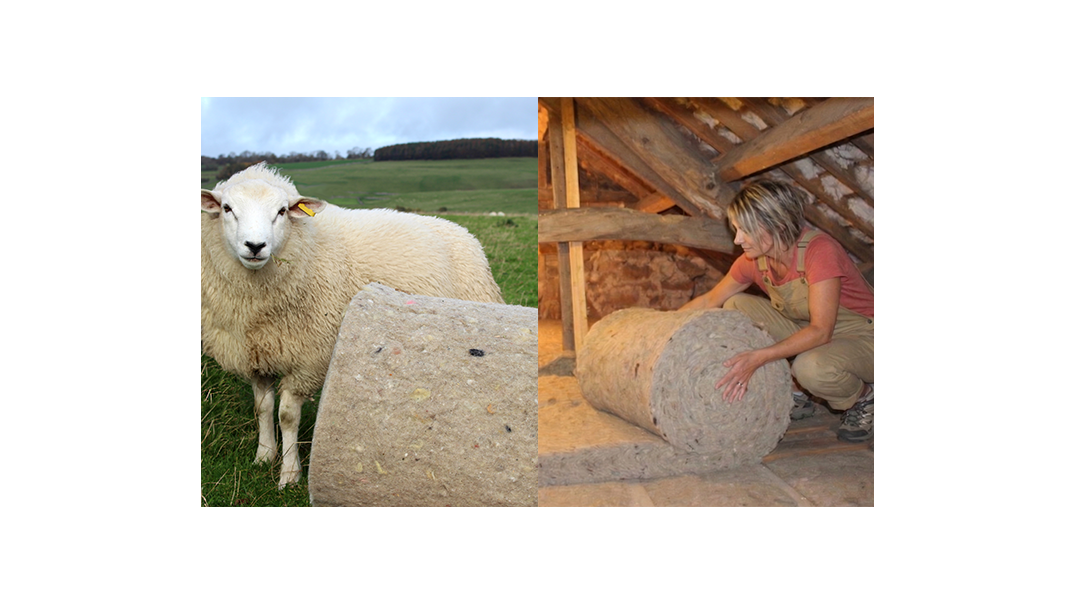
Here at Thermafleece, we’ve been making insulation from British sheep’s wool for more than 25 years. During that time, we’ve seen wool insulation evolve from a niche alternative into an established choice for homeowners, builders, architects and specifiers.
So when universities continue to investigate wool as an alternative to synthetic insulation, we’re always interested to see what new insights emerge.
Understanding how wool works in buildings
One of the reasons wool continues to attract research interest is that insulation performance involves much more than simply stopping heat from escaping.
The University of Strathclyde’s Advanced Materials Research Laboratory is currently investigating natural wool, including virgin and recycled wool, as an alternative to synthetic insulation.
The research is looking at properties including thermal conductivity and resistance, heat-storage capacity, thermal diffusivity, humidity and water permeability. It is also considering the potential for wool to be reused, recycled and remanufactured.
We think this broader approach is important.
An insulation material forms part of the building fabric. It doesn’t operate in isolation. The way it interacts with moisture, temperature and the other materials around it can all influence how a building performs.
And this is one of the areas where wool is particularly interesting.
Wool is a natural material
Wool has evolved to protect sheep from changing weather conditions, and its structure gives it some useful properties when used as insulation.
The fibres naturally trap air, helping to slow the movement of heat. Wool is also hygroscopic, which means it can absorb and release moisture from the surrounding environment.
For us, these characteristics have always been part of what makes wool such an interesting insulation material.
Our experience over more than 25 years has given us the opportunity to see how these properties translate into real buildings and different types of projects.
But research plays an important role too.
It allows scientists to measure, test and compare the performance of materials under controlled conditions. It can challenge assumptions, uncover new information and help us understand natural materials in greater depth.
We have been putting wool to work for 25 years
When Thermafleece was launched in 2002, it was felt there was an opportunity to make better use of one of Britain’s most natural and renewable resources. This is something we’ve built on as we’ve continued to develop products and our understanding of British sheep’s wool as an insulation material.
We’ve seen it used in new homes, renovations, extensions, traditional buildings and sustainable construction projects across the UK.
That practical experience is important because there is a difference between understanding how a material performs in a laboratory and seeing how it works as part of a real building.
We believe the two should complement each other.
Academic research can help us understand the science behind wool insulation. Experience from thousands of real-world installations helps demonstrate how that science translates into practical building performance.
Moisture is part of the picture
Moisture is another area where natural insulation continues to attract attention. Buildings need to manage moisture effectively, and the interaction between insulation and the surrounding environment is an important part of that.
Wool’s ability to absorb and release moisture is one of the characteristics that makes it different from many conventional insulation materials.
This is also an area we have been closely involved in through our work with the Alliance for Sustainable Building Products (ASBP).
We are a founding member and patron of The ASBP, and our Managing Director, Mark Lynn, is Chair of the organisation.
ASBP’s Natural Fibre Insulation Group brings together manufacturers, researchers and building professionals to explore the use of natural fibre insulation, including wool, hemp, wood fibre, straw, cellulose, cotton and flax.
That collaboration is important because the future of sustainable construction won’t be shaped by one company or one material. It will depend on sharing knowledge and improving our understanding of how natural materials can work in modern buildings.
The conversation is changing
We are also seeing a much wider change in the way people think about insulation.
For many years, conversations about insulation focused primarily on thermal performance and cost.
Those factors remain important, but today’s specifiers and homeowners are asking broader questions:
- Where does the material come from?
- Is it renewable or recycled?
- What is its environmental impact?
- How does it behave within a building?
- What happens at the end of its useful life?
And British sheep’s wool has an interesting story to tell.
It is a natural, renewable fibre that has been used by people for thousands of years. Today, we are finding new ways to use it in modern buildings while continuing to investigate exactly how its natural properties can contribute to building performance.
What does the research mean for us?
We don’t see research into wool insulation as an attempt to prove whether wool works.
Instead, we see continuing research as an opportunity to deepen our understanding.
The more we learn about wool’s thermal, moisture and environmental properties, the better we can develop products and provide useful information to the people specifying and installing them.
It also helps move the conversation about natural insulation forward.
The University of Strathclyde’s current research is another indication that wool is being taken seriously as a material worthy of detailed scientific investigation.
And that’s something we’re pleased to see.
Looking to the future
With our experience, we know British sheep’s wool remarkably well. But natural materials are complex, and there is always more to discover.
Research helps us deepen our understanding of wool’s unique properties, while practical experience shows how those properties perform in real buildings. Together, they help us continue developing products, improving knowledge and supporting the wider adoption of natural insulation.
Thermafleece insulation has been putting British sheep’s wool to work in buildings for more than 25 years, and we’re still learning, still innovating and still inspired by its potential.
As new research expands our understanding of this remarkable natural fibre, we’re excited to see how British sheep’s wool can continue to contribute to healthier, more sustainable buildings for generations to come.
